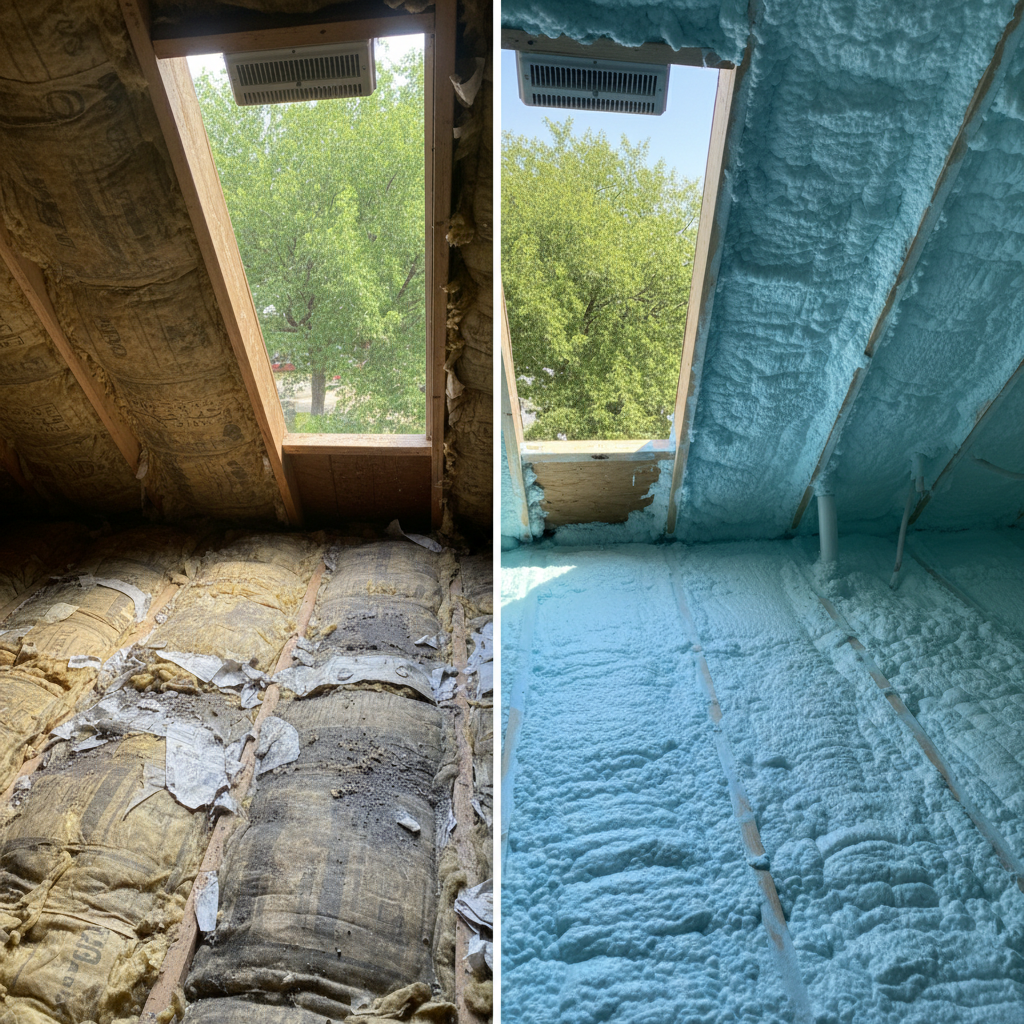
Closed Cell Spray Foam: Two Ways to Get It Done in Irving
Alright, let's talk closed cell spray foam. You've heard it's great for insulation, especially down here in Texas where the heat just doesn't quit. It's tough, it seals everything up tight, and it can really slash those AC bills. But when you start looking into it, you might hear about a couple of different ways to apply it. You've got your traditional, thicker application, and then there's the flash and batt method. What's the difference, and which one's right for your home in Irving?
I've seen both done plenty of times, and each has its place. It really comes down to what you're trying to achieve, your budget, and the specifics of your house.
The Full Send: Traditional Closed Cell Application
This is what most people picture when they think of closed cell spray foam. We're talking about applying a substantial layer, usually 2-3 inches thick, directly to the underside of your roof deck or the walls. This creates a solid, monolithic barrier that's incredibly effective.
Cost
Let's be honest, this is the more expensive option upfront. You're using a lot more material, and it takes more time to apply correctly. If you're looking at a full attic encapsulation, for example, the material cost adds up quickly. But remember, you're paying for a premium product and a premium installation.
Durability & Performance
This is where traditional closed cell shines. It's incredibly rigid once cured, adding structural integrity to your walls or roof deck. It's a fantastic air barrier and a strong vapor barrier, which is crucial in our humid Irving climate. With the thicker application, you're getting a higher R-value per inch, meaning superior thermal performance. This stuff isn't going anywhere, and it'll perform for the lifetime of your home. It's also great for keeping out pests, which can be a real problem in older homes around the Heritage District.
Maintenance & Appearance
Once it's in, you don't really maintain it. It's sealed, it's solid. Appearance-wise, it's a dense, hard foam that looks pretty uniform. It's not usually a finish you'd see, it's behind drywall or in an attic, so aesthetics aren't a huge concern here.
The Hybrid Approach: Flash and Batt
Flash and batt is a bit different. With this method, we apply a thinner layer of closed cell spray foam – usually just 1/2 inch to 1 inch thick – directly to the sheathing or wall cavities. This 'flash' layer acts primarily as an air and vapor barrier. Then, once that's cured, we come in and fill the rest of the cavity with traditional fiberglass batt or mineral wool insulation.
Cost
This is generally the more budget-friendly option. You're using less of the more expensive closed cell foam and making up the R-value with cheaper batt insulation. It can significantly cut down the upfront investment compared to a full closed cell application.
Durability & Performance
The thin layer of closed cell still gives you that excellent air and vapor seal, which is a huge benefit. That's key for preventing moisture issues and improving overall comfort. The batt insulation then provides the bulk of your thermal resistance. It's a good system, but it's not quite as robust as a full closed cell application. The R-value might be similar to a full closed cell, but the overall system isn't as rigid or as impervious to air movement if the batt isn't installed perfectly.
Maintenance & Appearance
Similar to traditional, once the foam is in, it's maintenance-free. The batt insulation is then covered. It's a clean look once completed, but again, it's usually hidden.
Which One Should You Pick for Your Irving Home?
Here's my take, especially considering our Texas heat and the way homes are built around here, whether it's a new build in Las Colinas or an older place near the University of Dallas:
If budget is your absolute top priority, and you still want the benefits of an air and vapor seal, flash and batt is a solid choice. It's a significant upgrade over just batt insulation alone, and it'll make a noticeable difference in your energy bills and comfort.
If you want the absolute best performance, maximum energy savings, and don't mind the higher upfront cost, go with the full closed cell application. Especially in an attic, that thick layer of closed cell creates an unvented attic space that's practically bulletproof against the Texas sun. It's a long-term investment that pays dividends in comfort and lower utility bills for decades.
For most homeowners in Irving looking for the best bang for their buck long-term, I usually lean towards the full closed cell. The durability, the structural benefits, and the superior thermal performance really stand out, especially when you're dealing with our long, brutal summers. You're getting a complete system that's designed to last and perform under extreme conditions.
Both options are way better than nothing, or just old, inefficient insulation. But if you're going to do it, do it right for our climate. Give us a call at Irving Spray Foam Insulation if you want to talk specifics about your house. We can help you figure out what makes the most sense for your situation.