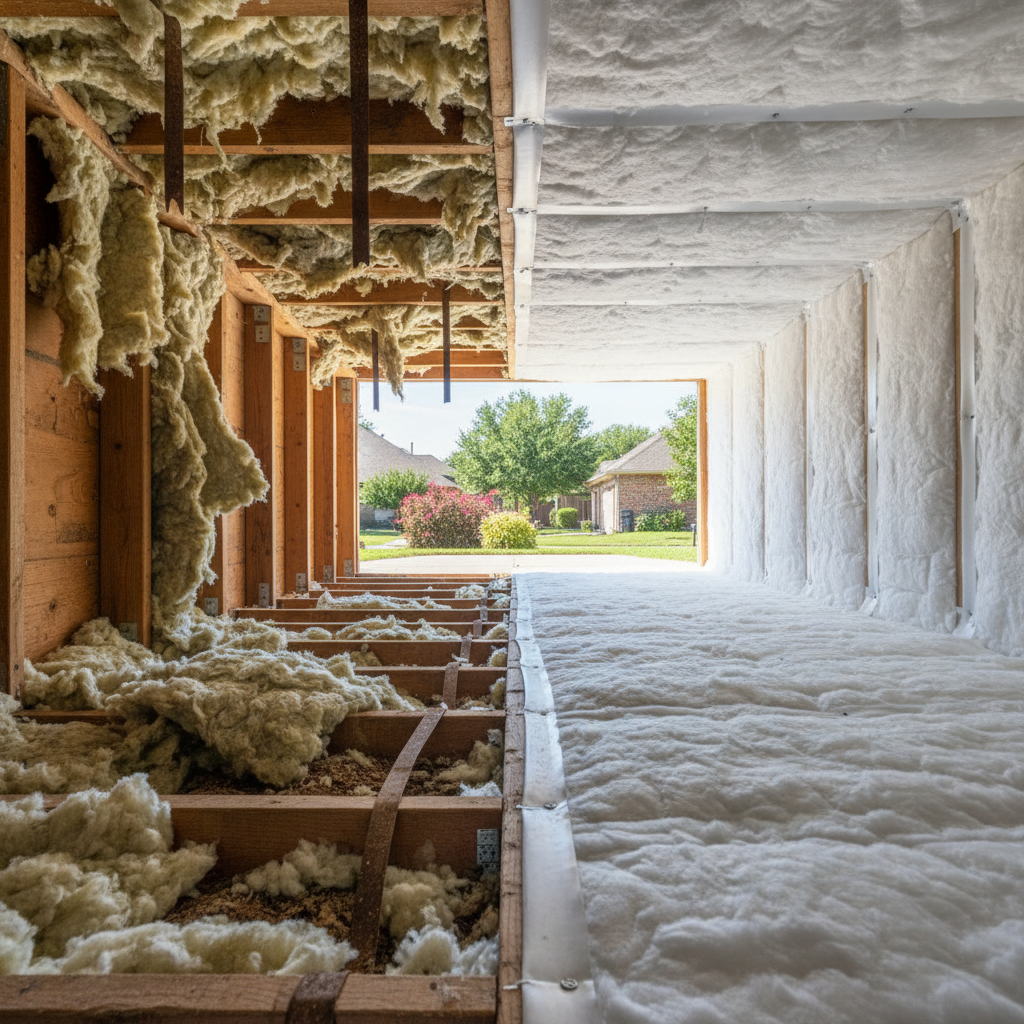
Alright, let's talk crawl spaces. If you've got one under your house here in Irving, you know it's a critical spot for your home's comfort and those pesky energy bills. But when it comes to insulating it, what's the right move? You've generally got two main paths: the old-school fiberglass batts or the newer, more advanced spray foam. I've seen both installed, and I've certainly seen the results years later, so let's break down what you need to know.
Fiberglass Batts: The Traditional Approach
For a long time, fiberglass batts were pretty much the only game in town for crawl spaces. You know them — those fluffy rolls or pre-cut pieces of insulation you often see. They get stapled up between the floor joists, right under your subfloor.
The Good:
- Lower Upfront Cost: This is usually the biggest draw, isn't it? Fiberglass batts are cheaper to buy and often quicker to install, which means a lower initial price tag.
- DIY-Friendly: If you're handy and don't mind getting a little itchy, you can probably install these yourself. Just make sure you've got the right safety gear.
The Not-So-Good:
- Moisture Magnet: This is a huge one, especially in a place like Irving. Our humidity, those sudden downpours, and the clay soil that holds moisture means crawl spaces here can get damp. Fiberglass soaks up moisture like a sponge. Once it's wet, it loses its R-value, sags, and can become a breeding ground for mold and mildew. I've pulled out countless soggy, moldy batts from homes in the Las Colinas area.
- Pest Problems: Rodents and insects love to nest in fiberglass. It's warm, dark, and offers good cover.
- Air Leaks: Batts don't seal anything. Air can still move right around them, which defeats a lot of the purpose of insulating. You'll still have drafts and energy loss.
- Durability: They don't last forever, especially if they get wet or disturbed by pests. You'll likely need to replace them down the line.
Spray Foam Insulation: The Modern Solution
Now, let's talk about spray foam. This is what we do at Irving Spray Foam Insulation, and for good reason. It's a liquid that gets sprayed into place and then expands, creating a continuous, airtight seal.
The Good:
- Superior Seal & R-Value: This stuff is incredible at stopping air leaks. It fills every crack and crevice, creating an airtight barrier. This means better temperature control and significantly lower energy bills. It also has a higher R-value per inch than fiberglass.
- Moisture Resistance: Closed-cell spray foam, which is what I usually recommend for crawl spaces, is impervious to water. It won't absorb moisture, so you don't have to worry about mold, mildew, or losing insulation value due to dampness.
- Pest Deterrent: Pests don't like spray foam. It's too dense for them to nest in, and it seals off entry points.
- Structural Support: Closed-cell foam adds a bit of rigidity to your floor joists, which is a nice bonus.
- Durability: Once it's in, it's in for the long haul. It won't sag, settle, or degrade over time. It's a permanent solution.
The Not-So-Good:
- Higher Upfront Cost: Yes, spray foam costs more initially than fiberglass batts. There's no getting around that. However, you're investing in a superior product that pays for itself over time through energy savings and avoiding future problems.
- Professional Installation Required: This isn't a DIY job. It requires specialized equipment and training to apply correctly.
My Recommendation for Irving Homeowners
Look, if you're just looking for the absolute cheapest thing to stick in your crawl space, fiberglass batts might seem appealing at first. But for homes here in Irving, with our climate and the common issues we see with moisture, fiberglass batts are almost always a temporary fix that leads to bigger headaches down the road.
You'll end up with damp, sagging insulation, potential mold growth, and still have high energy bills because of air leaks. You'll eventually have to pay someone to remove the old, degraded insulation and then install something new.
My honest recommendation for crawl space insulation in Irving is spray foam, specifically closed-cell. It's a more significant investment upfront, but it's a permanent solution that tackles moisture, air leaks, pests, and energy efficiency all at once. It's going to make your home more comfortable, healthier, and save you money on your utility bills for decades to come. Think of it as investing in your home's foundation and long-term well-being. It just makes sense.