Do I really need to insulate my shed in Irving?
That's a question I hear a lot, and my answer is usually, 'Depends on what you're doing with it.' If your shed is just for storing a lawnmower and some old paint cans you don't care about freezing or baking, then maybe not. But if you're using it as a workshop, an office, a 'man cave' or 'she shed,' or even just storing sensitive items like tools, electronics, or anything that can be damaged by extreme heat or cold, then absolutely, you should insulate it. We get some brutal summers here in Irving, with temperatures regularly hitting the high 90s and even triple digits. Without insulation, that shed turns into an oven. And while our winters aren't as harsh as up north, we still get freezes that can damage certain stored goods or make it miserable to work out there.
What's the best type of insulation for a shed?
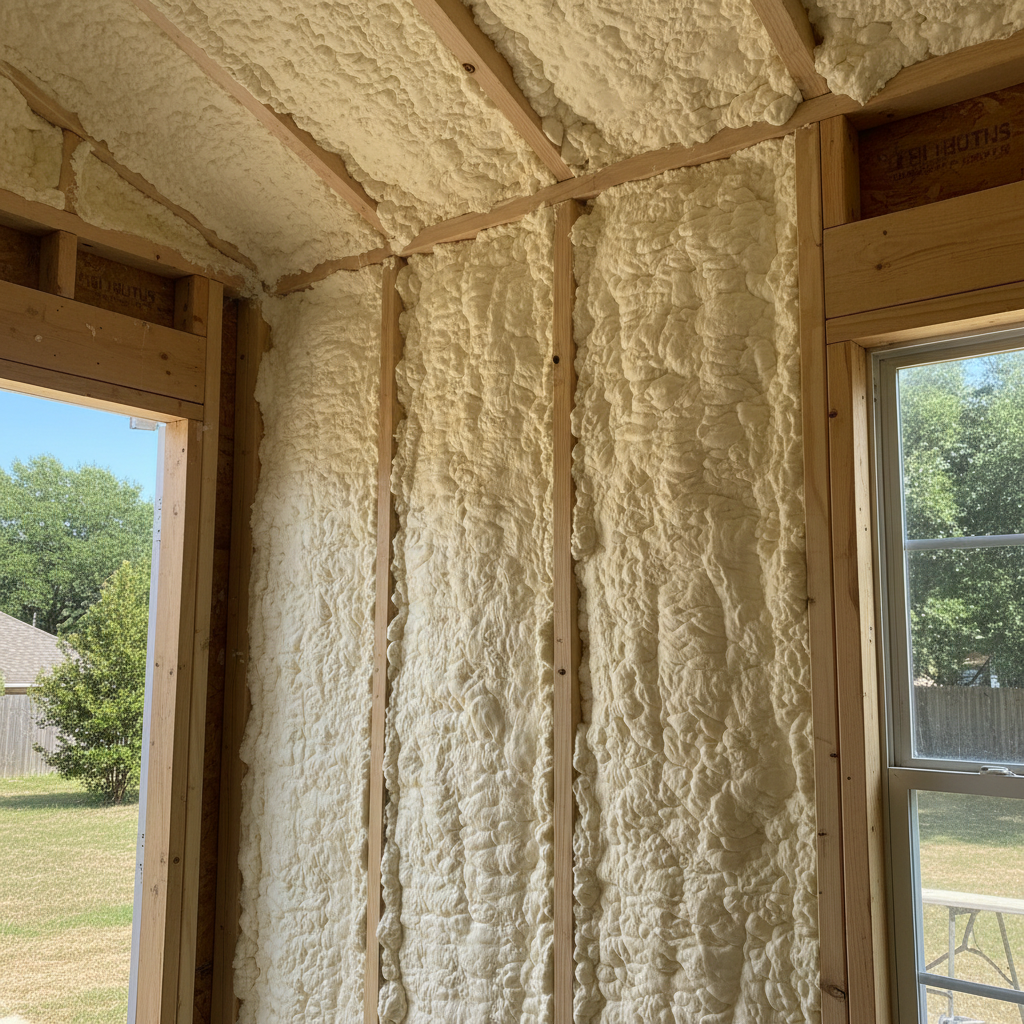
Alright, this is where things get a bit more technical, but it's important. For sheds, you've got a few main options. Fiberglass batts are common, especially if you're on a tight budget and doing it yourself. They're decent for thermal resistance, but they can be a pain to install, and if they get wet, their R-value drops dramatically. Plus, you need a vapor barrier with them. Rigid foam boards (like XPS or polyiso) are another good choice. They offer good R-value per inch, are easy to cut, and don't absorb water as readily as fiberglass. They also provide a bit of a vapor barrier. Then there's spray foam, which is what we specialize in at Irving Spray Foam Insulation. For a shed, especially if you're looking for maximum efficiency and a really tight seal, spray foam is tough to beat. It expands to fill every crack and crevice, creating an air seal that no other insulation type can match. This means better temperature control and less moisture intrusion, which is a big deal in our humid Texas climate.
Can I insulate my shed floor and ceiling too?
You bet you can, and you absolutely should if you want a truly comfortable and energy-efficient space. A lot of folks just think about the walls, but heat loss and gain happen through all surfaces. For the floor, especially if it's raised off the ground, insulating between the joists is critical. You can use rigid foam boards cut to fit, or if you're going with spray foam, we can seal that up perfectly. For the ceiling, if you have exposed rafters, spray foam works wonders. If you have an attic space above a finished ceiling, blown-in cellulose or fiberglass can work, but again, spray foam directly to the underside of the roof deck provides superior performance by creating a conditioned attic space. Don't skip these areas; they're often overlooked but make a huge difference.
How much does it cost to insulate a shed?
This is like asking 'how much does a car cost?' It varies wildly. It depends on the size of your shed, the type of insulation you choose, whether you're doing it yourself or hiring a pro, and how much prep work is needed. Fiberglass batts are generally the cheapest material, but you're paying for your time and potential headaches. Rigid foam boards are a step up. Spray foam, while a higher upfront cost, offers superior long-term performance and can save you money on heating and cooling if you're running HVAC in there. For a typical 10x12 or 12x16 shed, you could be looking anywhere from a few hundred bucks for DIY fiberglass to a couple thousand for professional spray foam, depending on the scope. It's an investment, but one that pays off in comfort and protection for your stored items or workspace.
Will insulating my shed help with moisture and pests?
Yes, it absolutely can, especially if you choose the right type of insulation and ensure a good air seal. Open-cell spray foam, for instance, can help manage moisture by allowing some vapor to pass through, while closed-cell spray foam acts as a vapor barrier itself. Both types, when properly installed, seal up all those tiny gaps and cracks where moisture can seep in and where pests like spiders, rodents, and insects love to make their home. Think about it: a well-sealed, insulated shed is less attractive to critters looking for an easy way in and a cozy place to nest. Plus, by keeping the interior temperature more stable, you reduce condensation, which is a big contributor to mold and mildew issues, especially in areas like Las Colinas where humidity can be a real factor.
What about ventilation after insulating?
This is a critical point that often gets missed. When you insulate and air-seal a shed, you're making it much tighter, which is great for energy efficiency. But a tighter space needs controlled ventilation, especially if you're going to be spending time in it, running equipment, or storing things that off-gas. You don't want stale air or moisture buildup. For a workshop, you might consider a small exhaust fan. For general storage, passive vents (like gable vents or a ridge vent with soffit vents) can still be effective, but make sure they're properly sized for the now-sealed space. The goal isn't to eliminate all airflow, but to control it. You want to bring in fresh air when needed and exhaust humid or stale air without losing all your conditioned air. It's a balance.
Hopefully, this clears up some of the questions you've got about insulating your shed. It's a smart move for most homeowners here in Irving, and it really transforms that outdoor space into something much more useful and comfortable.